Is James Hardie Siding Worth It in Northern Virginia?
Short answer: James Hardie fiber cement is worth it in Northern Virginia when you plan to stay in the house for many years, you want the look of painted wood, or your HOA or historic district steers you away from vinyl. Quality vinyl is the better buy when your budget sits closer to the vinyl range, you may sell in a few years, or you want siding you only ever wash. Either one works in our climate when it’s installed right.
We are a James Hardie Elite Preferred contractor and the #1 James Hardie installer in Virginia. We also install Alside vinyl, so we have no reason to push one over the other. Here is how we would walk a neighbor through it.
How do Hardie, vinyl and insulated vinyl compare?
Hardie costs more, won’t burn and looks closer to painted wood. Vinyl costs less and only needs washing. Insulated vinyl is vinyl with a foam backing, priced above standard vinyl.
| James Hardie fiber cement | Quality vinyl | Insulated vinyl | |
|---|---|---|---|
| Planning range (single-family home) | $18,000 to $45,000 | $10,000 to $22,000 | Costs more than standard vinyl; priced on your estimate |
| Expected life | 100+ years (InterNACHI estimate) | 60 years (InterNACHI estimate) | Same vinyl surface as standard vinyl |
| Manufacturer warranty | 30-year non-prorated, transferable product warranty; 15-year ColorPlus finish warranty | Alside Double Lifetime warranty on the vinyl we install | Varies by product line |
| Our workmanship warranty | 10 years | 10 years | 10 years |
| Fire | Noncombustible, Class A fire rating | Can melt or warp near strong heat such as a grill | Same as vinyl |
| Woodpeckers and termites | Hardie’s warranty covers woodpecker and termite damage | Woodpeckers target it far less than wood siding | Same as vinyl |
| Upkeep | Wash it; repaint someday | Wash it; painting usually not needed | Wash it; painting usually not needed |
| Look | Thick boards, deep shadow lines, smooth or wood-grain | Clean lap profiles, lighter panels | Stiffer panels from the foam backing |
| HOAs and historic districts | Check your covenants; allowed (smooth finish) on post-1931 buildings in Alexandria’s Old and Historic District | Check your covenants; not appropriate in Alexandria’s Old and Historic District | Same rules as vinyl |
Planning a siding project?
Start with siding replacement in Northern Virginia and what siding replacement costs, then request a free estimate or call (703) 499-8654.
Siding near you: Woodbridge · Fairfax · Alexandria · Springfield · Ashburn
When is James Hardie siding worth the extra money?
Hardie is worth it if you are staying long enough to get what you paid for: it won’t burn, its warranty covers woodpecker and termite damage, and it looks more like painted wood than vinyl does.
It makes the most sense if:
- You are staying. Hardie backs the boards for 30 years with a non-prorated product warranty that carries over to the next owner once.
- Your grill, deck or neighbor sits close to the wall. Hardie siding is noncombustible and carries a Class A fire rating. That counts on tight townhome rows and on decks where the grill sits a few steps from the siding.
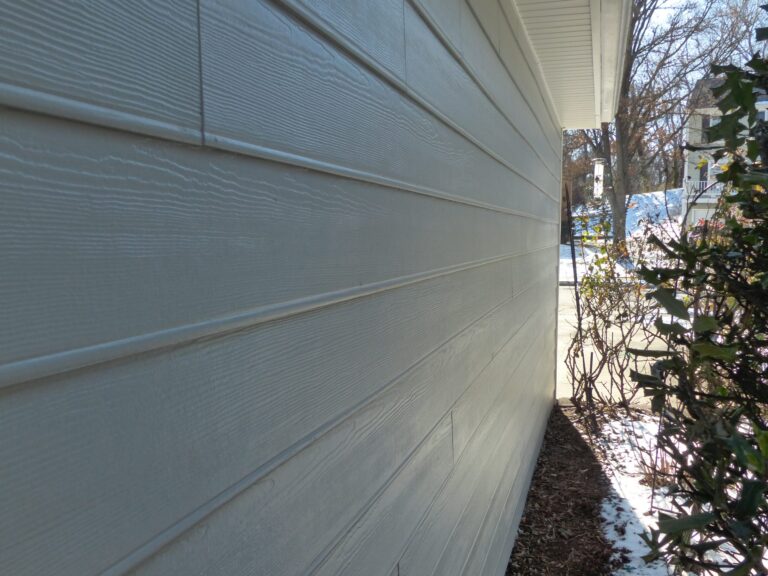
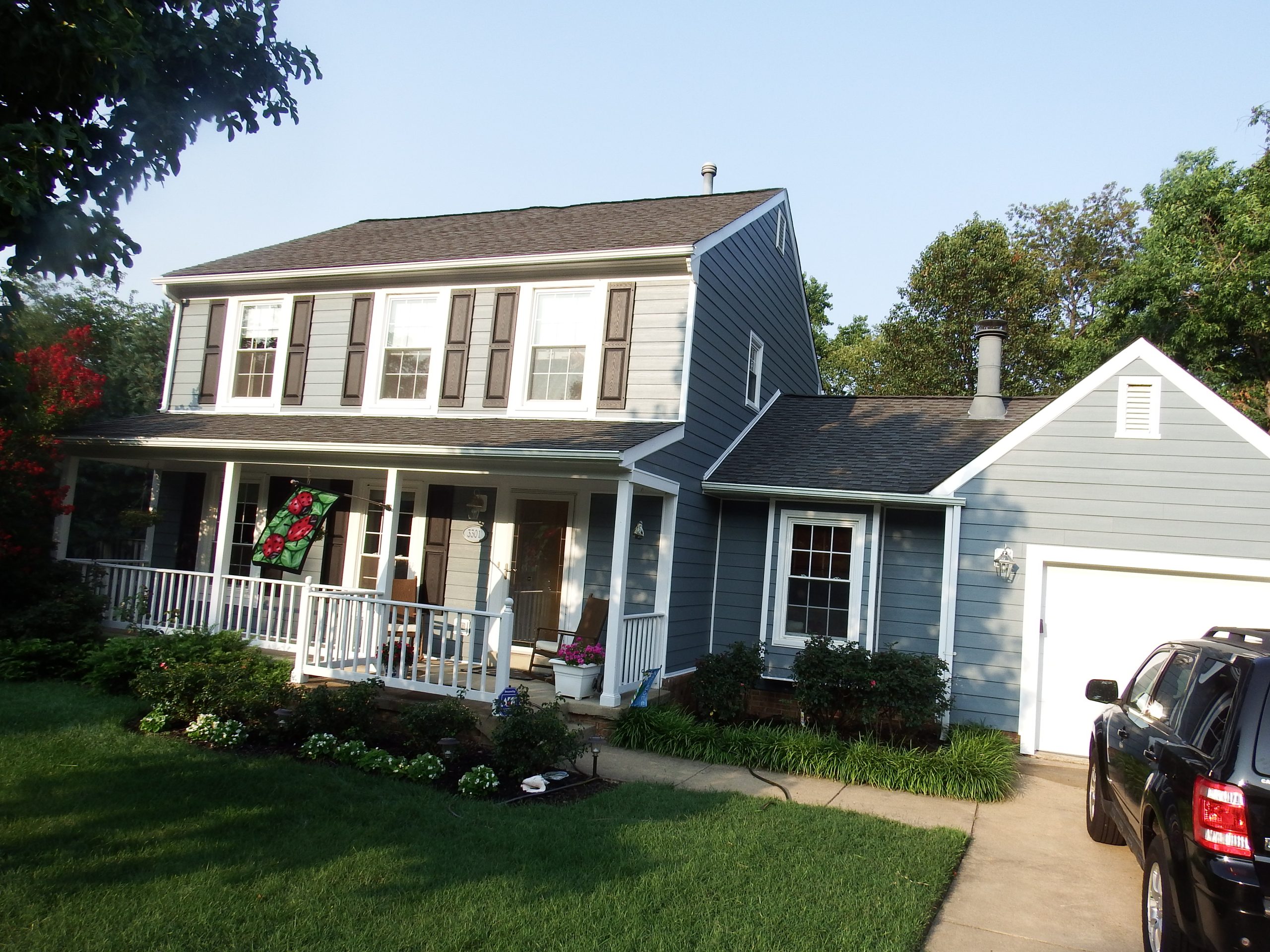
- You want a specific look. Thick lap boards, board-and-batten, shingle-style panels and smooth finishes read like painted wood from the street.
- Your HOA or historic district rules out vinyl. Alexandria’s Old and Historic District, for one, treats vinyl as not appropriate but allows smooth fiber cement on later buildings.
The catch is install quality. Hardie’s warranty only applies if the boards go up to its printed installation requirements, so a sloppy install can cost you the coverage. Our own crews install every job. See our James Hardie siding page for colors and profiles.
When is vinyl the better buy?
Vinyl is the better buy when price, low upkeep or a shorter stay in the house matter more to you than the look of fiber cement.
- Budget. Our planning range for a full vinyl siding replacement is $10,000 to $22,000, compared with $18,000 to $45,000 for Hardie on a single-family home.
- Upkeep. The vinyl trade group says vinyl only needs a wash now and then with mild soap and a garden hose, and it usually never needs paint because the color is built to last.
- Selling soon. If you are fixing up a house to list it, vinyl gets you a fresh exterior for less.
Insulated vinyl is the middle option. Alside says the foam insulation bonded to its Prodigy panels adds strength and helps them stand up to wind-blown debris and hail, so the wall looks flatter and takes a stray ball or branch better. Compare lines on our vinyl siding and insulated vinyl siding pages.
Does living in Northern Virginia change the choice?
Yes, in five ways: freeze-thaw winters, woodpeckers, heavy tree cover, HOA rules and historic districts.
Freeze-thaw winters: get the right Hardie line
Your estimate should name the Hardie climate line your ZIP code calls for. James Hardie sorts its siding into climate lines by ZIP code. Its HZ5 line is built for freezing temperatures, big seasonal swings, snow and ice, and Hardie’s warm-climate HZ10 warranty covers only limited parts of Virginia.
Hardie’s written warranty says the boards will not crack, split or warp from water, heat and freezing temperatures under its ASTM test. Vinyl copes with temperature swings a different way: it hangs loosely on its nails so each panel can expand and shrink. With either product, the moisture defense is the water-resistive barrier behind the siding, so ask how the wrap and flashing will be done.
Woodpeckers
Woodpeckers mostly go after natural wood siding such as cedar and redwood. Connecticut’s wildlife agency recommends vinyl or aluminum siding for homes with repeated woodpecker damage. Hardie goes a step further on paper: its warranty covers woodpecker and termite damage to the boards.
Heavy tree cover
Shaded, damp walls under big oaks and tulip poplars grow mildew on any siding. Both wash clean. Falling limbs are the bigger worry. Hardie’s warranty covers hail damage, and insulated vinyl’s foam backing helps it shrug off light hits.
HOA rules
Many HOAs set approved siding materials and colors, so check your covenants before you pick. We supply the product data sheets and manufacturer color names. We work closely with the committees, we have a great relationship with plenty of HOAs in the area, and it has never been a problem for us.
Historic districts
Alexandria’s Old and Historic District siding guidelines, amended in November 2025, say aluminum and vinyl siding are not appropriate. On buildings from after 1931, they allow composite siding such as fiber cement on all sides if it has a smooth finish and can be painted. Older buildings are expected to keep or match historic wood siding. If you live in a historic district, check the current guidelines with the city first.
Does Hardie siding pay for itself at resale?
In the latest Cost vs. Value report, fiber cement siding recouped more than its cost at resale in the Washington, DC market, and vinyl recouped a bit less than its cost.
The 2025 Cost vs. Value report from JLC compares the same size siding job in each material:
- Washington, DC: fiber cement recouped 103.7% of its cost; vinyl recouped 90%.
- South Atlantic region: fiber cement 119.2%; vinyl 94.9%.
- National average: fiber cement 114%; vinyl 97%.
Two cautions. These are estimates of added resale value, not a promise about your house. And Hardie costs more up front, so you’ll need to stay long enough, or sell into a market that values it, for that edge to show up. For full cost detail, read our James Hardie siding cost guide and our 2026 siding replacement cost guide.
How do the warranties compare?
Hardie covers the boards for 30 years but not the labor. Alside’s Double Lifetime warranty covers the vinyl. Our 10-year workmanship warranty covers how we install either one.
- Hardie boards: 30 years, non-prorated, and it moves to the first new owner. Hardie’s February 2024 warranty says it will not pay labor or accessory costs, and you must notify Hardie in writing within 90 days of finding a defect, with photos, before any permanent repair.
- Hardie ColorPlus finish: 15 years against peeling, cracking and chipping. In year one it can pay paint and labor; after that, the payout drops by 6.67% each year until it ends at year 15. Normal fading and chalking are not covered.
- Our work: a 10-year workmanship warranty on siding.
Read Hardie’s own summary on its HardieZone system page, and ask for the written warranty with your estimate.
Questions homeowners ask us about Hardie and vinyl
Is James Hardie siding worth the extra cost in Northern Virginia?
It is worth it if you plan to stay for many years, want the look of painted wood, or live where HOA or historic rules favor fiber cement. Our planning range for Hardie is $18,000 to $45,000 on a single-family home, compared with $10,000 to $22,000 for full vinyl replacement. In the 2025 Cost vs. Value report, fiber cement recouped 103.7% of its cost at resale in the Washington, DC market, compared with 90% for vinyl.
How long does Hardie siding last compared to vinyl?
InterNACHI’s life expectancy chart estimates 100+ years for fiber cement and 60 years for vinyl, with normal upkeep. Those are guidelines, not guarantees. The warranties are a firmer number: 30 years on Hardie boards and the Alside Double Lifetime warranty on the vinyl we install.
Do you have to paint James Hardie siding?
Not at first. Hardie ColorPlus boards come painted from the factory, with a 15-year limited finish warranty. Like any painted surface, the color slowly fades and chalks, so plan on repainting someday. Vinyl’s color is built to last, so painting it is usually not needed.
Does the James Hardie warranty cover labor?
The 30-year product warranty does not. Hardie’s written warranty says it will not pay labor or accessory costs; it replaces or refunds the defective boards, or reimburses up to twice their original retail cost. The ColorPlus finish warranty can cover paint and labor in the first year, then pays less each year until year 15. Our 10-year workmanship warranty covers our installation.
Will my HOA let me use Hardie or vinyl siding?
It depends on your covenants, so check them before you choose a product or color. Many HOAs approve siding by material and color. Bring your HOA’s rules to your free estimate and we’ll price siding that fits them.
Is vinyl siding a bad choice for a Northern Virginia home?
No. Hung loosely enough to move with temperature swings, quality vinyl holds up fine in our climate. It only needs washing, and it costs less up front. It’s the wrong fit mainly when a grill or neighboring house sits very close to the wall, when your HOA or a historic district such as Alexandria’s Old and Historic District rules it out, or when you want the thicker look of fiber cement.
Get both prices on one estimate
The easiest way to decide is to price your house both ways. Sunshine Contracting has been based in Woodbridge since 1993. In 33+ years we have worked with 30,000+ homeowners, and we hold a 4.9 out of 5 rating on GuildQuality from 999+ verified customers. Virginia Class A #2705075333 and Maryland MHIC #05-131843.
Look through our siding portfolio, read more on our siding services page, then request a free estimate or call (703) 499-8654.