How Much Does Siding Replacement Cost in Northern Virginia? (2026 Guide)
Here is the straight answer: most full vinyl siding replacements in Northern Virginia run $10,000 to $22,000 with us, and James Hardie fiber cement typically runs $18,000 to $45,000 for a single-family home. Smaller and simpler homes come in below those ranges. This guide walks through what actually moves the number, how the materials compare in practice, and how to read a siding quote so the cheap bid does not cost you twice.
Siding replacement cost at a glance
| Siding type | Typical whole-house range |
|---|---|
| Quality vinyl | $10,000 – $22,000 |
| Insulated vinyl | Upper end of the vinyl range and above |
| James Hardie fiber cement | $18,000 – $45,000 |
| Smaller or simpler homes | Below these ranges |
These are planning ranges from the projects we actually install, not internet averages. They reflect the complete job: tear-off, disposal, house wrap, flashing, trim details, and cleanup, done by our own crews and backed by our 10-year workmanship warranty. A free at-home consultation turns them into a firm written price for your house.
What moves the number
Size and stories
Siding is priced by how much wall you have, so square footage is the biggest single factor. Stories matter separately: second-story walls mean staging, ladder work, and slower, more careful installation, and that shows up in the price of an otherwise identical house.
The material you choose
Material is the second biggest lever, and it is the one you control. Good vinyl and James Hardie fiber cement can differ by $10,000 or more on the same house, which is why the honest comparison below matters more than any single number on this page.
Trim scope
Siding almost never travels alone. Fascia, soffit, window and door trim, and corner details are where a wall actually gets finished, and how much of that work is in scope moves the total meaningfully. It is also where rushed crews cut corners, because trim work is slow and mostly invisible on an estimate.
What the tear-off reveals
Once the old siding comes off, we occasionally find sheathing that has been quietly rotting behind a wall that looked fine from the yard. Repairing it adds time and cost, and we fix what we find rather than side over it, because covering rot is how siding jobs fail a few years later. No one can see through your walls before tear-off, which is another reason a phone estimate is a guess.
Vinyl or James Hardie, honestly
We install both, so we do not need to sell you either one.
Quality vinyl costs less, never needs paint, and handles Northern Virginia weather well. Modern insulated vinyl adds rigid foam backing that stiffens the panel and adds real insulating value across the wall. Vinyl’s limits are appearance under close inspection and how dark colors behave in full afternoon sun.
James Hardie fiber cement costs more up front, looks and feels closer to real wood, and shrugs off woodpeckers, squirrels, and our humid summers. HardiePlank lap siding carries a 30-year non-prorated transferable limited warranty, and the ColorPlus factory finish carries a separate 15-year limited finish warranty. We are a James Hardie Elite Preferred contractor and the #1 James Hardie siding installer in Virginia, which is worth mentioning here for one practical reason: Hardie is unforgiving of sloppy installation, so who hangs it matters as much as what it costs. Our full James Hardie siding cost guide goes deeper on the numbers.
The rule of thumb we give at kitchen tables: if you plan to stay long-term, or you are in a neighborhood where Hardie is the norm, fiber cement earns its premium. If budget leads, good vinyl professionally installed beats stretched-thin Hardie almost every time.
Do you need a permit to replace siding?
Usually not. Virginia’s statewide building code exempts like-for-like siding replacement from permits in most cases, which surprises homeowners who have budgeted a permit line item. There are real exceptions: historic districts have their own review boards, homes in mapped flood zones can be asked for a permit, and HOAs commonly require approval of the color and style even when the county requires nothing. We flag which of these applies to your address during the estimate and walk you through exactly what your HOA or review board will want to see.
Why the cheapest quote often costs more
A bid far below the ranges on this page is usually missing something you cannot see from the driveway: a moisture barrier, flashing behind trim and butt joints, rot repair, or the clearances that keep siding from wicking water up from the ground. Vinyl that is nailed tight instead of hung loose goes wavy in its first summer. Fiber cement with overdriven nails or unsealed cut edges fails slowly and then all at once. None of this shows on the day the crew leaves; all of it shows within a few years. When you compare quotes, compare what is written in them, not just the last line.
What a complete siding quote includes
Ours covers removal and disposal of the old siding, house wrap, new siding and the agreed trim scope, flashing at the joints and penetrations, and full cleanup. The price is written, it comes after we have measured and examined your actual walls, and it does not change at the kitchen table. The written price covers everything we can see and measure. If tear-off uncovers rotted sheathing or framing, that repair is priced at the per-unit rate written on your contract and approved by you before we continue. If another bid is vaguer than that, the vagueness is where the surprises live.
The choices hidden inside a siding price
Short answer: two siding quotes for the same house can land far apart and both be accurate, because each is pricing different decisions. Before comparing totals, confirm that every bid answers the seven questions below. Our written estimate answers each one on its own line.
| Item to confirm | What our written estimate specifies | Why it changes the price |
|---|---|---|
| Removal and disposal of the old siding | Tear-off of every wall in scope, haul-away, disposal fees and cleanup. | Some bids go over the old layer or charge disposal separately. Tear-off is also what lets us see the sheathing. |
| Moisture protection | The house wrap product, flashing at every window and door, and kick-out flashing where a roof edge meets a wall. | Nobody sees this layer after day two, so it is the first thing a low bid leaves out. |
| Trim, soffit and fascia scope | For each element: wrapped in aluminum, replaced with new trim board, or left as is. | Those are three different prices. A bid that says “trim” without saying which cannot be compared. |
| Concealed rot and sheathing repair | A unit price for sheathing replacement, stated up front. If tear-off uncovers damage, we show it to you and you sign a change order before it is repaired. | No one can see through a wall before tear-off. With the rate fixed in advance, the only open question is the quantity. |
| Finish and product line | James Hardie: the profile, and ColorPlus factory finish or primed board painted on site. Vinyl: the specific line, panel thickness and whether it is foam-backed. | Two “Hardie” or two “vinyl” bids can be different products. Finish decides who paints and when; thickness and foam backing decide rigidity. |
| Applicable warranties, listed separately | The manufacturer warranty for the product quoted (James Hardie: 30-year non-prorated substrate warranty plus the 15-year ColorPlus finish warranty; Alside vinyl: Double Lifetime warranty) and, on its own line, our 10-year workmanship warranty. | A manufacturer warranty covers the product. Only a workmanship warranty covers the installation. |
| Square footage basis | Measured wall area in squares (one square is 100 square feet of wall) and whether window and door openings were deducted. | Siding square footage means wall area, not floor area. Bids measured on different bases cannot be compared per square. |
Appearance rules narrow some of these choices before price does, since many Northern Virginia HOAs and architectural review committees approve siding profile, color and trim style. If your community needs approval, we supply the product data sheets, samples and color names; we work with HOAs and architectural review committees all over Northern Virginia and Maryland, we have a great relationship with them, and it has never been a problem for us. We also verify the permit requirement for your address with the local building department before work is scheduled.
If fiber cement is on your shortlist, our James Hardie siding cost guide for Northern Virginia covers ColorPlus, profiles and the Hardie warranty in more depth.
To see these seven items priced for your house, request a written siding estimate and we will measure the walls and put every line on paper.
Ways to make the budget work
Between material tiers, phased projects, and financing, there is usually a path that fits. Some homeowners do the weather-beaten south and west walls in Hardie and the rest in matched vinyl. Some phase the project across two seasons. Tell us your number and we will tell you honestly what it can do. And if your siding has years of life left, our free estimate will say so, without pressure: we would rather earn the project when it is actually time than talk you into it early. We are a replacement company. We re-side whole homes and complete elevations, for example the full south and west walls that take the most weather, and we can phase a project where that makes sense. What we do not take is patch-only siding repair, where a few loose or damaged panels are swapped and the rest of the wall is left as is, apart from warranty service on our own installations. So when we say your siding is not ready yet, we mean it.

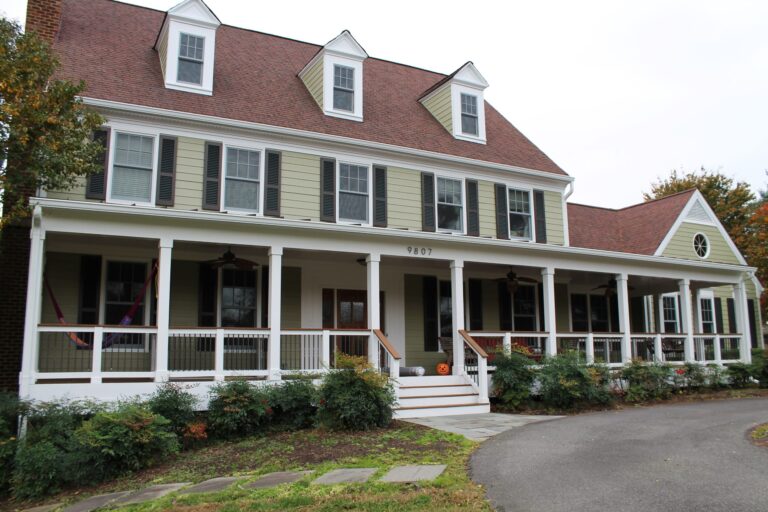
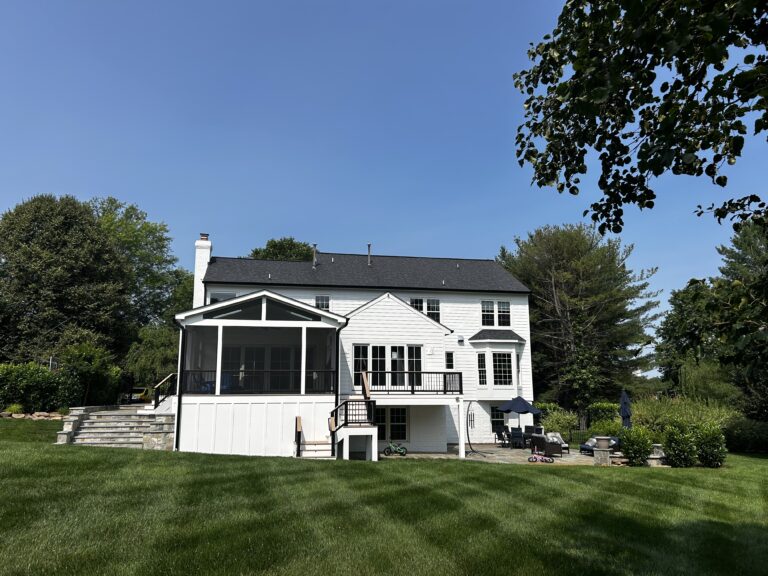
Project stories: James Hardie lap siding and a new GAF roof in Burke, VA and board and batten siding and a new GAF roof in Springfield, VA, with before and after photos.
Planning both? Read should you replace windows and siding together.
Siding cost FAQs
How much does it cost to replace siding on a house in Northern Virginia?
Most full vinyl replacements run $10,000 to $22,000 and James Hardie fiber cement $18,000 to $45,000 for a single-family home, with smaller and simpler homes coming in below those ranges. House size and stories, the material and grade, trim scope, and any sheathing repairs uncovered at tear-off drive the number. A free at-home estimate makes it exact.
How long does siding replacement take?
Siding and trim jobs average about 4 to 6 days depending on the size of the house. Tear-off comes first and is the loudest part, and hidden sheathing repairs can add time. All debris leaves with us when the job is done.
Is insulated vinyl worth it over standard vinyl?
On a house with cold walls and higher heating bills, often yes: the foam backing adds insulating value across the whole wall and makes the panels noticeably more rigid. It prices at the upper end of the vinyl range and above, still well under fiber cement. We will tell you which vinyl line actually fits your house rather than defaulting to the premium one.
Get the exact number for your house
Schedule a free consultation. We measure your walls, walk the material options honestly, and leave a firm written price with no pressure to decide on the spot. Serving all of Northern Virginia from Woodbridge since 1993.