Best Window Styles for Northern Virginia Homes
For most Northern Virginia homes, the honest starting point is a double-hung window. It suits the colonials and ramblers this region is full of, it ventilates well in our long shoulder seasons, and it is easy to live with. From there the decision branches: casements seal tighter, sliders fit wide openings, bay and bow windows add light and space, and specialty shapes solve problems nothing else can. Installed prices at Sunshine run $600 to $1,200 per window for quality vinyl replacements, with fiberglass and wood above that. Here is how the styles actually compare, based on what we install across Northern Virginia.
Double-hung: the Northern Virginia default
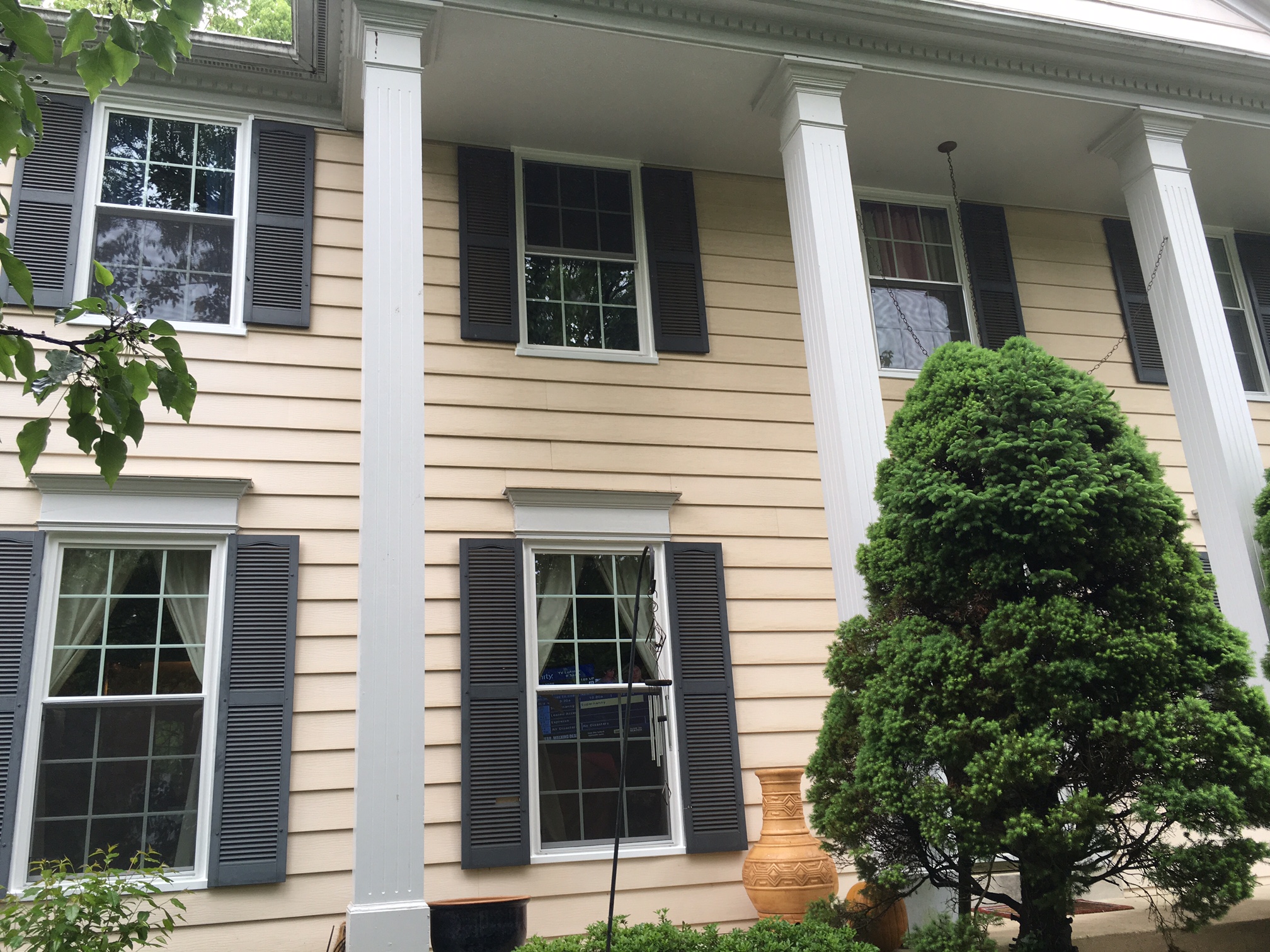
Double-hung windows have two sashes that slide vertically, so you can open the top, the bottom, or both. That flexibility matters here more than in most climates: in April and October you can vent warm air out the top while keeping a breeze off the sofa, and in summer a partly opened top sash works even when it is raining lightly.
They fit nearly every house style in the region, from 1950s brick ramblers to new construction, and tilt-in sashes make second-story cleaning a ground-floor job. If you are replacing windows in a colonial and want the house to look the way the street expects, this is usually the answer. It is also the style with the widest choice across the brands we install, which helps when you are balancing budget against features. From Simonton and Alside on the value end to Marvin, Pella, and Andersen at the premium end, nearly every manufacturer leads with its double-hung line, so this style gives you the most room to compare.
Casement: the efficiency pick
Casement windows hinge at the side and crank outward. When they close, the sash presses against the frame like a door against weatherstripping, which is why casements generally seal tighter than any sliding style. If a room always feels drafty, or a wall takes the brunt of winter wind, a casement is often the right tool.
They also catch passing breezes and scoop them into the house, something a double-hung cannot do. The trade-offs are practical: the crank hardware has a harder job than a sliding sash, and an open casement reaches into the yard, which matters next to decks, walkways, and shrubs you would rather keep.
Sliding: wide openings, simple mechanics
Sliding windows are essentially double-hungs turned sideways, moving on horizontal tracks. They shine where the opening is wider than it is tall, which describes a lot of rambler and split-level walls around Fairfax and Prince William counties. With no springs or balances to wear out, there is very little to go wrong mechanically, and large sliders deliver a lot of glass for the money.
Bay and bow: light, space, and a focal point

Bay and bow windows project outward from the wall, a bay in three angled sections and a bow in a gentler curve of four or five. They change a room in a way flat glass cannot: light enters from multiple directions, the room gains a shelf or a seat, and the house gains a focal point from the street.
Because they carry structural weight out beyond the wall, installation quality matters more here than with any other style. A bay that was framed and supported properly holds its lines year after year; one that was not will sag and tell on its installer. This is a style where the crew is as important as the product.
Awning and basement: ventilation where it is awkward
Awning windows hinge at the top and open outward, forming a small roof over the opening. You can leave one open in the rain, which makes them useful above kitchen sinks, in bathrooms, and paired beneath or above fixed glass. Their close cousin, the hopper-style basement window, brings light and air into spaces that badly need both. If a basement bedroom is in your plans, ask about egress requirements early; window size and type are part of that conversation.
Garden: a greenhouse in miniature

Garden windows are small glass boxes that project from the wall, usually over a kitchen sink, with a shelf made for herbs and plants that want the sun. They add a little dimension to the kitchen and a lot of light. Not every wall suits one, but where they fit, people tend to love them out of proportion to their size.
Geometric and specialty shapes

Geometric windows cover the shapes standard sashes cannot: circles, half-rounds, trapezoids, and the transoms and gable accents that give a two-story foyer its drama. They are usually fixed glass, chosen for light and looks rather than airflow, and they are custom work by definition. On the contemporary homes around Reston and Lake Barcroft, replacing an original trapezoid correctly is often the difference between preserving the design and spoiling it.
Matching the style to your house
A few Northern Virginia specifics we walk through at every estimate:
- Colonials and Cape Cods almost always look right with double-hungs, often with grilles that match the original pattern.
- Ramblers and split-levels take sliders and casements naturally, especially on wide living-room walls.
- Townhomes are usually best served by matching the existing style so the row keeps its rhythm, and many associations require exactly that.
- Historic districts in places like Old Town Alexandria, Occoquan, and Clifton have review boards with opinions about visible windows. We help pull together the product documentation those reviews ask for.
- Bedrooms and basements carry egress rules that can limit which styles and sizes are allowed. We flag this before anything is ordered.
Insert or full-frame: the other half of the decision
Whatever style you choose, it gets installed one of two ways. An insert window fits inside your existing frame, which keeps cost down and works well when the original frame is square and sound. Full-frame replacement removes everything down to the rough opening and rebuilds it, which costs more but corrects frames that have shifted, rotted, or were never right. The house decides which approach fits, not the sales pitch, and openings on the same house sometimes call for different answers. We assess every opening at the estimate and quote accordingly, so the price reflects what your windows need rather than a blanket assumption.
Glass, grilles, and color come next
Style is only the first decision. Every style then gets configured: the glass package (low-E coatings and gas fills that earn their keep in our summers), the grille pattern (colonial grids for traditional homes, clean glass for contemporary ones), and the frame color inside and out. Dark exterior frames are having a long moment in Northern Virginia, and some materials carry dark colors better than others, which is one of the reasons the brand conversation matters. None of these choices changes the installed price as much as people fear, and all of them change how the finished house reads from the street. We walk through the combinations at the estimate with samples in hand rather than swatches on a screen.
What window styles cost
Style affects price less than people expect; material and size drive most of it. Quality vinyl replacements run $600 to $1,200 per window installed with us, fiberglass and wood run higher, and projection styles like bays and bows price as small construction projects rather than simple swaps. Our window cost guide breaks the numbers down, and if the vinyl-versus-fiberglass question is on your mind, this comparison gives the honest version.
Whatever the style, every window we install is measured and ordered for its specific opening and carries a lifetime workmanship warranty, with the product itself covered by the manufacturer. Details live on our warranties page.
Window style FAQs
What is the most popular window style in Northern Virginia?
Double-hung, and it is not close. It suits the region’s dominant house styles, ventilates flexibly across our long spring and fall, and cleans easily with tilt-in sashes. Casements are the usual second choice where energy efficiency or hard-to-reach openings are the priority.
Which window style is most energy efficient?
Casement windows generally seal tightest, because closing them presses the sash into the weatherstripping rather than sliding past it. That said, installation quality moves efficiency more than style choice: a well-installed double-hung will generally outperform a badly installed casement.
Do I have to replace all my windows with the same style?
No. Plenty of projects mix styles by room: casements over the kitchen sink where cranking is easier than lifting, sliders on wide walls, double-hungs everywhere the street can see. What matters is that the sightlines and finishes work together, and that is part of what we help you sort out at the estimate.
Not sure which style fits your house? Schedule a free in-home consultation. We measure, talk through the options across the ten brands we carry, and leave you a written price. Serving all of Northern Virginia from Woodbridge since 1993.